Area Real Estate News & Market Trends

You’ll find our blog to be a wealth of information, covering everything from local market statistics and home values to community happenings. That’s because we care about the community and want to help you find your place in it. Please reach out if you have any questions at all. We’d love to talk with you!

Feb. 6, 2026

Don't Dismiss the First House You See—There's No Magic Number in Home Hunting!

You've probably heard the old adage: "Never buy the first house you see." Or maybe someone told you that you need to tour at least 5, 10 (or 20, or whatever arbitrary number) homes before you're "allowed" to fall in love and make an offer. It's a persistent myth in real estate—one that can lead buyers to second-guess themselves, pass on incredible properties, and end up settling for something less ideal later on.

The truth? There's no magic number of homes you have to view before committing. Some buyers find their forever home after just one showing (and go on to love it for years), while others might need to see a dozen or more to feel confident. The key isn't hitting a specific quota—it's about whether the house checks your must-haves, fits your budget, aligns with your lifestyle, and gives you that unmistakable feeling of "this could be home."

Why does this myth persist? It stems from a desire to avoid buyer's remorse and ensure you're making an informed decision. In slower markets or when inventory is high, touring multiple homes can help you compare features, neighborhoods, and values. But in today's reality—especially in sought-after areas like Asheville, Weaverville, Marshall, Mars Hill, and the surrounding Western North Carolina communities—homes can move fast. Waiting to see "just a few more" might mean missing out on the property that truly fits, only to find that nothing else measures up.

Here are some real reasons the first house (or an early one) could absolutely be the right one:

  • You've done your homework upfront. With online listings, virtual tours, market reports, and pre-approval in hand, many buyers are far more prepared than in the past. By the time you step through the door, you already know the comps, the layout possibilities, and whether it matches your criteria.
  • It hits all your non-negotiables. If the home has the right number of bedrooms, is in the desired school district or commute zone, feels right emotionally, and pencils out financially—why force yourself to keep looking? Chasing the "perfect" after-the-fact often leads to compromise elsewhere.
  • Market timing matters. In competitive pockets of Western NC, desirable homes don't linger. Buyers who act decisively on a strong match often win out over those who hesitate to "make sure."
  • Emotional connection is real. Many homeowners share stories of knowing instantly that a house was "the one"—they could picture family dinners, holidays, and everyday life there. Dismissing that gut feeling just because it's the first one can lead to regret.

Of course, this doesn't mean you should rush blindly. Always get a thorough inspection, review disclosures, run the numbers with your lender, and consult professionals. But don't let an outdated rule of thumb rob you of a great opportunity.

The bottom line: Trust your research, your instincts, and the facts—not a mythical number of showings. The right home isn't about how many you saw; it's about how right it feels for you.

If you're looking to buy or sell your home in Asheville, Weaverville, Marshall, Mars Hill, or the surrounding areas, give me a call—I'd love to help you navigate this exciting (and sometimes unpredictable) market with confidence and local expertise.

Happy hunting!

I am not a lender, mortgage broker, or financial institution, and nothing in this blog post or on my site constitutes mortgage lending advice—always consult a qualified lender for your specific financing needs.

Disclaimer: The information provided in this blog post is for general informational purposes only and is not intended as financial, legal, or real estate advice. Real estate markets are dynamic and can change rapidly; individual results may vary based on specific circumstances, location, market conditions, and other factors. Always consult with a qualified real estate agent, attorney, mortgage professional, or other appropriate advisor for personalized guidance. No guarantee is made regarding the accuracy, completeness, or timeliness of the information presented. This post does not constitute a solicitation or offer to buy or sell any property.

Posted in Real Estate Tips
Feb. 3, 2026

Stop Calling Every Listing Agent: Why "Shopping Around" Agents This Way Can Hurt Buyers More Than It Helps

In the world of home buying, especially in markets like Asheville and Western North Carolina where homes can sell quickly, some buyers think the fastest way to see properties is to pick up the phone and call the listing agent directly for every interesting listing they spot online. They'll call one agent for this house, another for that one, and keep going—treating each listing agent like a personal tour guide without any commitment. It might seem efficient at first glance, but this approach is not only inefficient—it's often considered poor etiquette and can actively work against you as a buyer.

Even more so now, thanks to changes from the National Association of REALTORS® (NAR) settlement (effective August 17, 2024), which requires agents using the MLS to have a written buyer agreement in place before touring a home with a buyer they're "working with." This includes scenarios where a listing agent provides personalized services like private showings or buyer-focused guidance—not just open-house access.

Here's why calling a bunch of different listing agents to view homes is a problematic strategy:

1. It Creates Conflicts and Wasted Effort for Everyone

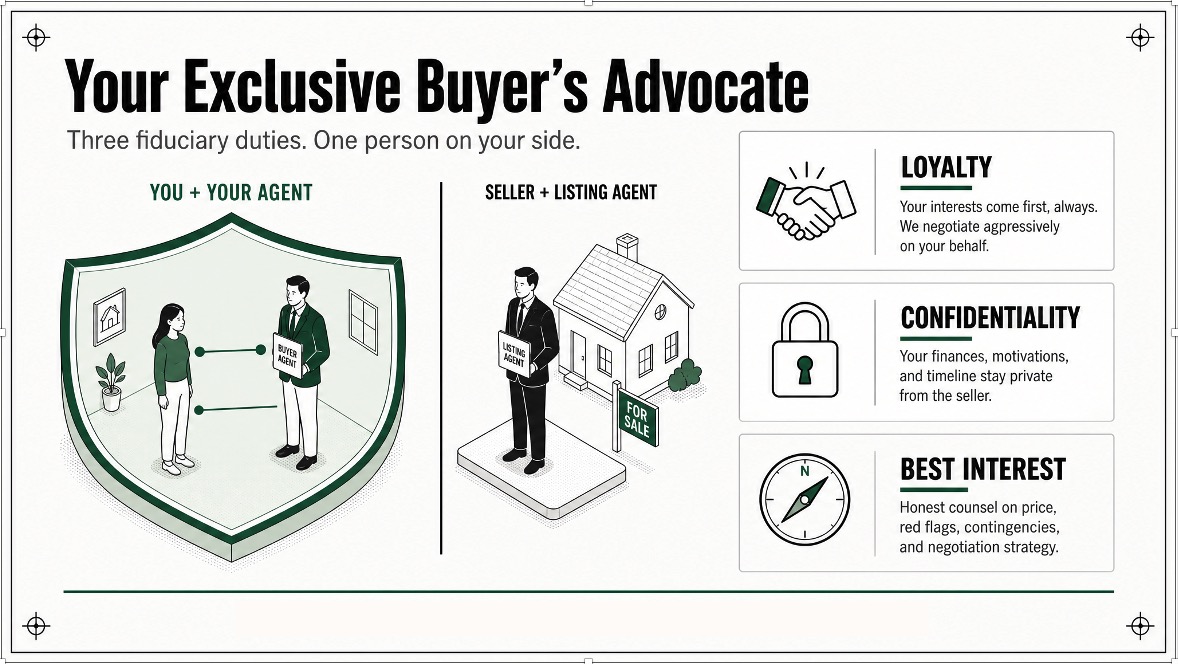
Listing agents represent the seller, not you. When you ask them to show you the home, they're investing their time (coordinating schedules, opening the property, answering questions) with the expectation that if you like it and make an offer, they'll handle the transaction—potentially as a dual agent or earning the full commission if no buyer's agent is involved. If you later decide to work with a dedicated buyer's agent and submit an offer through them, it can lead to disputes over "procuring cause" (who introduced you to the property and deserves the commission). This can sour relationships, make sellers less inclined to accept your offer, or even create awkward dual-agency situations where the agent can't fully advocate for either side due to conflicting fiduciary duties.

In dual agency scenarios—common when buyers contact the listing agent directly and then pursue an offer without their own representation—the agent is legally required to remain completely neutral under North Carolina rules. This means they must act impartially, treating both buyer and seller fairly without favoring one side. They cannot aggressively negotiate on your behalf (e.g., pushing hard for a lower price) because doing so might harm the seller, their original client. They also can't share confidential motivations, pricing flexibility, or other sensitive info from one party to the other without permission. While dual agents still owe basic duties like honesty, disclosure of material property facts, and fairness, they lose the ability to provide full advocacy or undivided loyalty to you as the buyer. North Carolina law allows dual agency only with written disclosure and informed consent from both parties, but even then, the agent functions more like a neutral facilitator than a dedicated advocate. This diluted representation can leave you at a disadvantage in negotiations, especially in competitive markets.

Adding to this complexity: The NAR settlement now requires a written buyer agreement before an agent (including a listing agent) can tour a home with a buyer they're "working with"—meaning providing services beyond basic seller representation, like arranging private viewings or discussing your specific needs. Without it, agents can't legally proceed with those personalized tours in most cases, forcing unrepresented buyers into either signing an agreement (often leading to dual agency) or sticking to open houses only.

2. You Miss Out on True Representation and Advocacy

Without a committed buyer's agent, you're essentially going it alone—or worse, relying on an agent who aren't obligated to negotiate aggressively on your behalf, or help strategize your offer. A good buyer's agent knows the local market, has access to the same MLS listings, can schedule showings efficiently across multiple properties, and acts as your advocate in negotiations. By calling listing agents piecemeal, you're fragmenting your search, duplicating efforts, and potentially overwhelming yourself with inconsistent information instead of getting coordinated, expert guidance. Also every agent you meet with will require you to sign a Buyer Agreement–of they should if they are following the rules.

3. It Damages Your Reputation in the Local Market

Agents talk. In tight-knit communities like Asheville, Weaverville, Marshall, Mars Hill, and surrounding areas, word spreads if a buyer is "agent-hopping" or using listing agents as free tour services without intent to follow through. This can make it harder to get showings later, reduce enthusiasm from agents for your offers, or even lead to sellers viewing you as less serious or reliable compared to buyers who come with a pre-approved, agent-represented offer.

4. Better Alternatives Exist

If you're just starting out and want to explore without commitment, attend open houses (where no buyer agreement is typically required), use online tools for virtual tours, or interview a few buyer's agents to find the right fit—most are happy to discuss terms and show properties once you've signed a suitable written agreement. Partnering early with one trusted agent streamlines everything under the new rules and ensures you're fully represented.

Bottom line: Treating listing agents like on-demand tour operators without loyalty or representation isn't a smart shortcut—it's a common pitfall that can complicate your search, weaken your position, trigger dual agency neutrality issues, and create a some problems for the agents in regard to making sure you don't have an exclusive buyers agency agreement with another agent. The most successful buyers build a team: get pre-approved, choose a trusted local buyer's agent, sign the necessary agreement upfront, and let them do the heavy lifting while you focus on finding the right home.

If you're looking to buy or sell your home in Asheville, Weaverville, Marshall, Mars Hill, or the surrounding areas, give me a call—I'd love to help you navigate this exciting (and sometimes unpredictable) market with confidence and local expertise.

Happy hunting!

As always, these blogs are based on situations I have encountered.

Disclaimer: The information provided in this blog post is for general informational purposes only and is not intended as financial, legal, or real estate advice. Real estate markets are dynamic and can change rapidly; individual results may vary based on specific circumstances, location, market conditions, and other factors. Always consult with a qualified real estate agent, attorney, mortgage professional, or other appropriate advisor for personalized guidance. No guarantee is made regarding the accuracy, completeness, or timeliness of the information presented. This post does not constitute a solicitation or offer to buy or sell any property.

Posted in Real Estate Tips
Jan. 30, 2026

Why Agent Communication Matters

In real estate markets like Asheville and the surrounding areas, communication isn’t a “nice to have” — it’s essential. Whether you’re buying or selling a home, the speed and clarity with which your agent communicates can directly affect your stress level, your trust in the process, and even whether a deal makes it to the closing table.

Buyers Feel the Impact First

For buyers, slow or inconsistent communication is one of the biggest sources of frustration.

  • Homes in Asheville and nearby areas like Weaverville, Marshall, Mars Hill, and other areas often move quickly

  • Showing requests, questions, and offers come with tight timelines

  • Delayed responses can mean missed opportunities

When buyers can’t get answers or feel left in the dark, confidence drops fast. Excitement turns into uncertainty, and buyers may start second-guessing the property — or their agent.

Agent-to-Agent Communication Can Make or Break a Deal

Every real estate transaction depends on clear, timely communication between agents.

  • Clarifying offer terms and expectations

  • Responding to counteroffers

  • Coordinating where checks and fees go
  • Coordinating inspections, repairs, and deadlines

  • Addressing small issues before they grow

Many deals hinge on details. When communication slows down, negotiations can stall, tensions rise, and transactions can fall apart — not because of price or condition, but because problems weren’t addressed in time. In the past, I've waited for days for something as simple as a simple document, and I've often wondered to myself–if the seller knew how slow or and unresponsive their agent was, they probably wouldn't have hired them in the first place. Trust Is Built Through Responsiveness. 

Trust in real estate is built through consistent communication.

  • Prompt replies show professionalism

  • Regular updates reduce stress

  • Honest answers build confidence

When communication is lacking, clients may feel ignored or uncertain, even if that’s not the agent’s intent. Over time, this can erode trust and make clients question the entire process and the home they are interested in. 

What Strong Communication Actually Looks Like

Good communication isn’t about being available every minute — it’s about being dependable.

  • Returning calls, texts, and emails in a timely manner–not hours or days later 

  • Keeping clients informed, even when there’s no major update

  • Responding quickly to other agents

  • Solving potential problems early instead of letting them linger

In Asheville and the surrounding areas, strong communication is not a bonus — it’s a necessity.

Lack of communication truly is one of the most common complaints sellers (and buyers) have about their real estate agent.

  • Multiple industry sources and client surveys consistently list lack of communication or slow response as a frequent frustration. 

  • Some analyses specifically highlight “going MIA” or poor follow-up as a leading reason clients end relationships with their previous agent. 

So while there can be other complaints (pricing, marketing, professionalism), communication consistently ranks at or near the top of what sellers (and buyers) report as a problem when they’re unhappy with their agent.

The Bottom Line

Real estate is complex and emotional. Poor communication adds unnecessary stress and can jeopardize otherwise solid deals. A responsive agent helps transactions move forward, protects trust, and creates a smoother experience for everyone involved.

When choosing an agent, communication should be at the top of your list — because in real estate, how well your agent communicates can directly affect your outcome.


This is for informational purposes only and does not constitute legal, financial, or professional real estate advice. Consult a qualified professional for your specific situation. Each office is independently owned and operated.

Posted in Real Estate Tips
Jan. 24, 2026

The Viral "Top 4% Agent" Claim: Separating Fact from Hype in NAR's Latest Data

In the fast-paced world of social media, real estate stats can spread like wildfire—especially ones that sound dramatic. You've likely seen posts claiming that agents who close 10 or more transactions per year are in the "top 4%" of all REALTORS®. These have been making the rounds on platforms like Facebook, Instagram, and TikTok since the release of the National Association of REALTORS® (NAR) 2025 Member Profile in August 2025. While the underlying data highlights important truths about agent productivity, these viral interpretations can be a bit misleading. Let's break it down accurately, based on the official NAR report (linked here: REALTORS® Show Strong Commitment to Profession Amid Market Headwinds, New NAR Report Finds), and discuss why experience still matters most for buyers and sellers in areas like Asheville and Western North Carolina.

The Claim and Where It Comes From

The buzz started with eye-catching graphics and reels emphasizing how few agents are truly active producers. Common stats cited include:

  • Around 71-75% of licensed agents (a broader group than just NAR members) closing zero transactions in a given year.
  • Another chunk handling just 1-4 deals, and so on, leading to rough calculations where agents with 10+ closings land in the "top 4-7%."

These figures aren't pulled from thin air—they're extrapolations from industry data, including NAR's surveys and estimates of total licensed agents in the U.S. (roughly 1.3-3 million, many of whom are inactive or part-time). However, the official NAR 2025 Member Profile (reflecting 2024 activity among active REALTORS®) reports a median of 10 transactions per member. This means half of surveyed active agents closed 10 or fewer, and half did 10 or more—positioning consistent 10+ producers at or above the median for engaged professionals.

Here's where it gets misleading: NAR doesn't explicitly state a "top 4%" percentile in their report. The viral posts often blend NAR's member-focused data with broader licensee estimates, amplifying the drama to celebrate high achievers (and sometimes to market coaching services or highlight personal stats). While directionally true—most licensed agents aren't closing many deals—the exact "top 4%" is an approximation, not a precise NAR-endorsed ranking. It's great for motivation, but it can overstate the elite status for agents hitting the median among active pros.

Why Experience Still Wins, Regardless of the Exact Percentile

Misleading or not, the core message holds: In a market full of part-timers and low-producers, choosing an experienced, agent is crucial. For buyers and sellers in competitive yet shifting areas like Asheville, Weaverville, Marshall, Mars Hill, and surrounding Western North Carolina, here's why partnering with a proven pro makes all the difference:

  • Navigating Market Shifts: With inventory rising (up 35-80% in parts of Western NC) and more buyer leverage in 2026, experienced agents spot trends early—helping you price right, negotiate effectively, and help avoid overpaying or underselling.
  • Expert Handling of Rules and Complexities: Post-NAR settlement, pros adept at the ins and outs of real estate help you navigate the complex process of buying or selling real estate. 
  • Proven Results Over Hype: Whether it's 10+ closings putting someone at the median or in a higher percentile, the real value is in the skills honed from volume: stronger networks, sharper negotiations, and fewer surprises.

In short, don't get caught up in the social media spin—focus on finding an agent who is experienced, communicates well, gets to know you and your situation, and will do a great job. Viral stats remind us that not every agent is equipped for today's market, but the best ones deliver regardless of the exact ranking.

As a dedicated local agent with a strong history of successful closings in the area, I'm here to provide that reliable expertise without the exaggeration.

If you're looking to buy or sell your home in Asheville, Weaverville, Marshall, Mars Hill, or the surrounding areas, give me a call—I'd love to help you navigate this exciting (and sometimes unpredictable) market with confidence and local expertise.

As always, let me know if I missed something.

Happy hunting!

Disclaimer: The information provided in this blog post is for general informational purposes only and is not intended as financial, legal, or real estate advice. Real estate markets are dynamic and can change rapidly; individual results may vary based on specific circumstances, location, market conditions, and other factors. Statistics referenced are based on publicly available NAR reports and industry discussions as of early 2026; always verify the latest data directly from NAR. Always consult with a qualified real estate agent, attorney, mortgage professional, or other appropriate advisor for personalized guidance. No guarantee is made regarding the accuracy, completeness, or timeliness of the information presented. This post does not constitute a solicitation or offer to buy or sell any property.

Posted in Real Estate Tips
Jan. 20, 2026

Why Pre-Approval is Your Secret Weapon in the Home-Buying Game

Buying a home is one of life's biggest adventures—and biggest stresses. Imagine this: You've spent weekends touring open houses, and finally, you spot the one. It's perfect—the right neighborhood, that dream kitchen, and a backyard begging for barbecues. You rush to make an offer (without knowing what you can afford), only to find out you cant afford it or the seller is getting ready to accept an offer from another buyer who is already pre-approved. This happens a lot...

Why? Because that buyer came armed with a pre-approval letter, proving they were ready to roll. If you're not pre-approved before you start shopping, you could be setting yourself up for heartbreak–especially on homes that are hot. In this post, we'll break down why getting pre-approved upfront is crucial, and clear up the confusion between pre-qualification and pre-approval.

Note: I am not a lender and nothing in this blog post or on my site constitutes mortgage lending advice—always consult a qualified lender for your specific financing needs.

Pre-Qualification vs. Pre-Approval: What's the Difference?

These two terms get tossed around a lot, but they're not interchangeable. Understanding the distinction can save you time, money, and frustration. Let's dive in.

Pre-Qualification: The Quick Glance

Pre-qualification is like a casual chat with a lender. It's a preliminary step where you provide basic info about your income, debts, and assets—often just verbally or through a simple online form. The lender basically gives you a ballpark estimate of how much you might borrow.

Pre-Approval: The Serious Commitment

Pre-approval takes things to the next level. Here, you submit actual documentation—like pay stubs, tax returns, bank statements, and employment verification (whatever the ask for). If approved, you get a letter stating the loan amount, interest rate (subject to change), and terms you're pre-approved for—essentially like a conditional green light.

Pre-approval is like having a reservation at a hot restaurant: It gets you to the table faster and shows you're not just browsing.

In short, pre-qualification is informal and exploratory, while pre-approval is more thorough and credible. Skipping straight to pre-approval is often smarter if you're serious about buying.

The Importance of Getting Pre-Approved Before You Shop

In today's real estate market—especially in areas like Asheville and the surrounding Western North Carolina communities where inventory can shift quickly and competition remains strong—timing is everything. Here's why prioritizing pre-approval can make or break your home search.

1. It Could Keep You From Missing Out on Your Dream Home

Homes don't wait. In competitive pockets around Asheville, multiple offers are still common, and sellers prioritize buyers who can close quickly. A pre-approval letter attached to your offer screams, “I'm ready!” Without it, your bid might get overlooked in favor of someone who's already vetted. Pre-approval lets you strike while the iron is hot.

2. It Sets a Realistic Budget

Nothing stings like falling in love with a house only to realize it's out of reach. Pre-approval gives you a more accurate picture of what you can afford, factoring in current rates, your down payment, and closing costs. This should help prevent you from wasting time on properties that are pipe dreams and helps you focus on homes that fit your finances. Plus, it builds confidence—you know where you stand.

3. It Strengthens Your Negotiating Power

Sellers and agents love pre-approved buyers because they reduce risk. Your offer looks more solid. In a balanced market like we're seeing in 2026, that pre-approval could be the edge that wins the day. Many listing agents will not let their home be show

In today's competitive real estate market, many sellers and their listing agents require buyers to provide a mortgage pre-approval letter (or proof of funds for cash buyers) before scheduling a private showing. This policy protects their time, privacy, and property by filtering out unqualified or casual "looky-loos" who may not be able to afford or finance the home. Showing a property involves significant inconvenience—sellers often need to vacate the house, stage it, and prepare for strangers to walk through their personal space—so they want assurance that only serious, financially capable buyers will see it.

Without pre-approval, there's a higher risk the buyer will fall in love with the home, submit an offer, and then have the deal fall through due to financing issues, wasting everyone's time and potentially derailing the seller's plans. For cash buyers, proof of funds serves the same purpose: it verifies liquid assets are readily available to close quickly and reliably.

This upfront requirement helps prioritize motivated buyers, reduces the chance of failed transactions, and in hot markets, gives sellers confidence that any eventual offer will be strong and likely to close smoothly.

4. It Streamlines the Entire Process

Once you find a home, the mortgage process can take weeks. With pre-approval, much of the heavy lifting is done, so you can move to final approval faster. This minimizes delays and stress, letting you focus on the fun parts—like planning your housewarming party.

Bottom line: Shopping without pre-approval is like going to a job interview without a resume. It might work out, but why risk it?

Final Thoughts: Get Ahead of the Curve

If you're eyeing a new home in 2026, don't delay—contact a lender today for pre-approval. It's a small step that pays big dividends, ensuring you're not just dreaming about your future home, but actually working toward securing it. Remember, the market waits for no one. Arm yourself with pre-approval, and turn house hunting from a gamble into a strategic win.

If you're looking to buy or sell your home in Asheville, Weaverville, Marshall, Mars Hill, or the surrounding areas, give me a call—I'd love to help you navigate this exciting (and sometimes unpredictable) market with confidence and local expertise.

Happy hunting!

Disclaimer: The information provided in this blog post is for general informational purposes only and is not intended as financial, legal, or real estate advice. Real estate markets are dynamic and can change rapidly; individual results may vary based on specific circumstances, location, market conditions, and other factors. Mortgage pre-approval and qualification requirements are subject to lender guidelines, credit approval, and verification of information. Always consult with a qualified mortgage professional, real estate agent, attorney, or other appropriate advisor for personalized guidance. No guarantee is made regarding the accuracy, completeness, or timeliness of the information presented.

Posted in Real Estate Tips
Jan. 19, 2026

Buyer Agreements Are Required

Due to the 2024 NAR settlement, all REALTORS® are required to have a signed Buyer Agreement before showing any homes to a buyer. I don’t make the rules—that’s well above my pay grade—but I am responsible for following them while still helping my clients navigate a process that seems to change often.

Showing homes without a signed buyer agreement is a violation of current real estate rules, and agents who do so can face fines, disciplinary action, or worse. The agreement exists for a reason: it clearly defines representation, duties, and compensation, which reduces confusion and helps prevent disputes later in the transaction. From time to time, I hear buyers say, “But the last person didn’t make us sign anything.” That response raises an important question—if an agent is willing to ignore clear rules and risk their livelihood just to get you in a house, can you trust them to protect your interests when it really matters? A professional agent follows the rules, explains them clearly, and puts client protection ahead of shortcuts.

From an agent’s perspective, this matters too. If a buyer has a valid agreement with another agent, they shouldn’t be contacting me—and one of the first questions I ask is whether they already have an agreement with another agent–if so I send them packing before they fall under the spell of my southern charm.

Back to the agents showing houses without an agreement: Clear agreements protect everyone involved. It brings to mind the saying, “How you do anything is how you do everything.”

Here’s how I like to handle the agreement in practice. It’s really not a big deal—but the recent changes are new and can feel a little uncomfortable at first. To make things easier, I’ll show homes for the first couple of outings using an agreement that applies only to the specific homes we’re seeing on those days. This keeps everything compliant, avoids some pressure of signing a contract with a stranger, and you’re not locked into working with me for a year if you decide you don’t like my haircut. It’s simply a practical, low-stress way to follow the rules while keeping the process comfortable for everyone involved—including me. The best part is if you love the home we see those days–we're good to go as long as you are pre-approved or have cash. 


This is for informational purposes only and does not constitute legal, financial, or professional real estate advice. Consult a qualified professional for your specific situation.

Posted in Real Estate Tips
Oct. 2, 2025

Welcome to Your Local Real Estate Resource

Welcome to Your Local Real Estate Resource

This website is built specifically for your local market—not a national portal. Whether you're buying, selling, or just exploring, you'll find tools and insights tailored to your community, backed by real people who are here to help.

🔍 Search for Homes in Your Area

Use our Home Search tool to explore listings that match your needs. Filter by location, price, and features to find homes that fit your lifestyle.

👉 Start Your Home Search

📊 Stay Informed with Market Reports

Our Market Reports give you up-to-date insights on pricing trends, inventory, and recent sales in your neighborhood. It’s a great way to stay ahead—whether you're buying or selling.

👉 View Market Reports

💰 Know Your Home’s Value

Thinking about selling? Use our Home Value tool to get a quick estimate of your property’s worth in today’s market. It’s fast, free, and a great starting point.

👉 Check Your Home Value

👋 Talk to a Real Local Expert

This isn’t just a website—it’s backed by real humans who know your area and are ready to help. Visit our About Us page to learn more about your local agent and how they can support your real estate journey.

👉 Contact Us


Thanks for visiting!
We’ll be updating this blog regularly with tips, insights, and local updates. And if you ever have questions, just reach out—we’re here to help.

Posted in Market Updates